



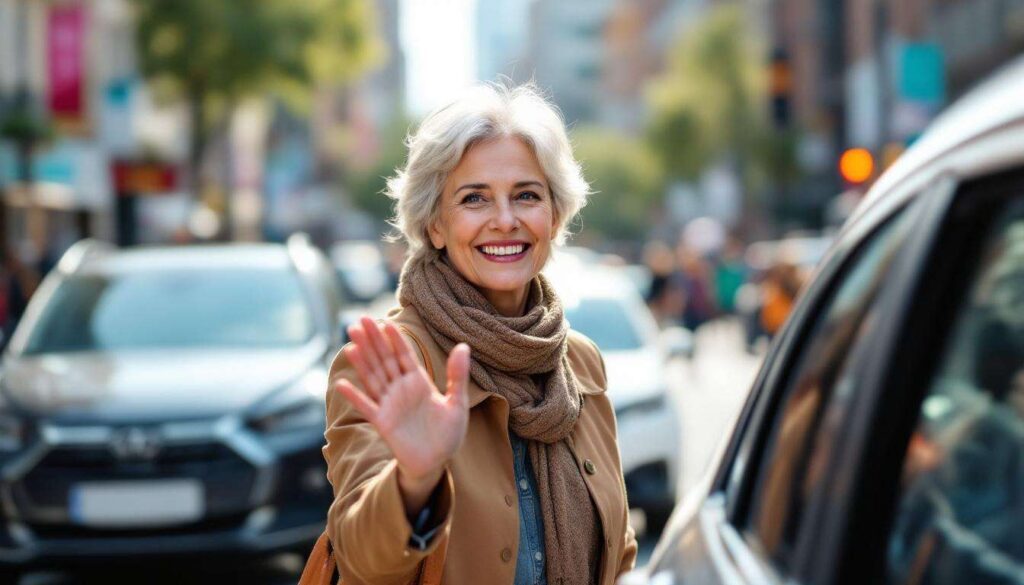
A fleeting moment at a zebra crossing can reveal more about human nature than one might expect. When pedestrians acknowledge drivers with a simple wave or nod after crossing the road, this seemingly insignificant gesture speaks volumes about their psychological makeup. Recent research into everyday social behaviours has uncovered fascinating connections between these micro-interactions and deeper personality characteristics, suggesting that those who consistently thank drivers possess distinct traits that set them apart from the general population.
The psychology behind a simple gesture
Recognition as a social mechanism
The act of raising one’s hand to acknowledge a driver represents far more than basic courtesy. Psychological research indicates that this behaviour stems from an innate human need for social recognition and reciprocal interaction. When individuals pause to thank drivers, they are essentially affirming the social contract that governs public spaces, acknowledging that another person has performed an action on their behalf.
This gesture activates specific neural pathways associated with reward processing in the brain. Studies in neuroscience have demonstrated that expressing gratitude triggers activity in regions linked to positive emotional responses, creating a beneficial cycle for both the giver and receiver of acknowledgement. The psychological benefits extend beyond the immediate moment, contributing to reduced stress levels and enhanced overall life satisfaction.
The gratitude connection
Experts in positive psychology emphasise that gratitude expressions, even in fleeting encounters, reinforce mental health and emotional well-being. The wave at a crossing serves as a micro-dose of gratitude that accumulates throughout daily life, building resilience against negative emotional states. This behaviour reflects an individual’s capacity to notice and appreciate small acts of cooperation in their environment.
| Psychological benefit | Impact on daily life |
|---|---|
| Stress reduction | Lower cortisol levels throughout the day |
| Enhanced social bonds | Increased trust in community interactions |
| Improved mood | Greater overall life satisfaction |
Understanding these psychological mechanisms provides insight into why some individuals consistently perform this gesture whilst others rarely do. The behaviour patterns established in these small moments reflect broader approaches to social engagement and emotional regulation.
Associated personality characteristics
Markers of social intelligence
Individuals who regularly thank drivers at pedestrian crossings demonstrate elevated social intelligence. This trait encompasses the ability to read social situations accurately, understand unspoken rules of interaction, and respond appropriately to others’ actions. Those who wave possess a heightened awareness of the collaborative nature of shared public spaces, recognising that smooth traffic flow depends on mutual cooperation between drivers and pedestrians.
Social intelligence manifests in several observable ways:
- Quick assessment of social contexts and appropriate responses
- Recognition of others’ contributions to one’s own convenience
- Ability to maintain positive social exchanges even in brief encounters
- Understanding of reciprocal obligations in communal settings
Politeness as a personality cornerstone
The thanking gesture correlates strongly with politeness as a stable personality characteristic. Unlike situational courtesy that varies depending on context, individuals who consistently acknowledge drivers display politeness as an ingrained trait that permeates their interactions. This reflects a fundamental belief in the importance of respectful social conduct regardless of whether the interaction is significant or trivial.
Research indicates that polite individuals tend to experience more positive social outcomes, including stronger relationships and greater professional success. Their consistent courtesy creates a positive feedback loop, as others respond favourably to their behaviour, reinforcing the value of these small gestures.
These personality characteristics form the foundation for understanding why certain individuals naturally adopt thanking behaviours whilst others find such gestures unnecessary or performative. The distinction reveals deeper psychological patterns that extend well beyond pedestrian crossings.
The underlying personality traits
Humility and self-perception
A notable trait among those who wave to drivers is humility. This characteristic manifests as an absence of entitlement in public spaces, with individuals viewing their right to cross as something facilitated by others’ cooperation rather than an absolute privilege. People with higher humility scores in personality assessments tend to acknowledge their interdependence with others, recognising that smooth social functioning requires mutual accommodation.
Humble individuals perceive themselves as part of a larger social fabric rather than isolated actors pursuing individual goals. This worldview naturally leads to expressions of gratitude when others contribute to their convenience, even in minor ways such as stopping at a crossing.
Empathy and perspective-taking
The capacity for empathy plays a crucial role in thanking behaviours. Individuals who acknowledge drivers demonstrate an ability to adopt the driver’s perspective, understanding that stopping requires effort and attention. This perspective-taking ability allows them to appreciate the driver’s contribution to their safe passage, prompting a grateful response.
Empathetic traits associated with thanking gestures include:
- Recognition of others’ experiences and inconveniences
- Emotional attunement to social dynamics
- Consideration of how one’s actions affect others
- Desire to maintain positive emotional atmospheres
These underlying traits create a personality profile characterised by social awareness and cooperative tendencies. However, the interpretation of such behaviour is not universally positive, leading to questions about the motivations behind these gestures.
Politeness or a submissive complex ?
The fine line between courtesy and deference
Whilst thanking drivers generally reflects positive traits, psychological analysis reveals a more complex picture. Some researchers question whether excessive politeness might indicate submissive tendencies or an unhealthy need for social approval. The distinction lies in the motivation: is the gesture driven by genuine appreciation or by anxiety about social standing ?
Individuals with submissive personality patterns may perform thanking gestures not from gratitude but from fear of negative judgement. They might worry that failing to acknowledge drivers will result in disapproval or conflict, leading to compulsive politeness that serves their anxiety rather than authentic social connection.
Healthy versus problematic gratitude
Distinguishing between healthy courtesy and problematic submission requires examining the individual’s broader behavioural patterns. Healthy thanking behaviour stems from:
| Healthy courtesy | Problematic submission |
|---|---|
| Genuine appreciation | Fear of disapproval |
| Consistent across contexts | Excessive in all situations |
| Balanced self-worth | Low self-esteem indicators |
| Selective appropriateness | Compulsive performance |
Most individuals who wave to drivers fall into the healthy courtesy category, with their behaviour reflecting positive social values rather than psychological dysfunction. However, awareness of this distinction helps prevent over-interpretation of simple gestures as indicators of deeper issues.
The broader context in which these behaviours occur provides additional layers of meaning, particularly when examining how culture and society shape our micro-interactions.
Social and cultural implications
Cultural variations in acknowledgement
The prevalence and interpretation of thanking gestures at crossings vary significantly across cultures. In some societies, such behaviour is virtually universal and expected, whilst in others it remains relatively uncommon. These cultural differences reflect broader values regarding individualism, collectivism, and the nature of social obligations.
Societies with strong collectivist orientations tend to emphasise mutual recognition and interdependence, making thanking gestures more common and socially reinforced. Conversely, highly individualistic cultures may view such acknowledgements as unnecessary, with pedestrians and drivers each fulfilling their designated roles without requiring explicit gratitude.
Building social capital
Beyond individual psychology, thanking behaviours contribute to community-level social capital. When such gestures become normalised within a community, they create an atmosphere of mutual respect and cooperation that extends beyond pedestrian crossings. This accumulated goodwill strengthens social bonds and increases overall trust within the community.
Communities characterised by high levels of these micro-acknowledgements tend to report:
- Greater sense of neighbourhood cohesion
- Increased willingness to help strangers
- Lower rates of road rage and traffic conflicts
- Enhanced perceptions of safety and friendliness
The social implications extend to urban planning and community development, with some researchers suggesting that encouraging such positive micro-interactions could improve overall quality of life in densely populated areas.
These observable behaviours at crossings represent just one category of the countless small gestures that populate daily life, each carrying its own psychological significance.
What your micro-gestures reveal
The language of small actions
Thanking drivers represents merely one example of how micro-gestures communicate personality and values. Psychologists increasingly recognise that these small, often unconscious behaviours provide windows into individuals’ character traits, emotional states, and social orientations. The way people navigate everyday interactions reveals patterns that larger, more deliberate actions might obscure.
Other revealing micro-gestures include holding doors, making eye contact, offering small smiles to strangers, and adjusting one’s pace to accommodate others. Each of these behaviours correlates with specific personality dimensions and reflects underlying attitudes towards social cooperation.
Self-awareness and behavioural choice
Understanding the psychological significance of these gestures enables greater self-awareness. Individuals can examine their own patterns of micro-interactions to gain insight into their personality traits and social tendencies. This awareness creates opportunities for intentional behaviour modification, allowing people to cultivate the traits they value.
For those who wish to develop more positive social patterns, consciously adopting thanking behaviours can serve as a starting point. Research suggests that behavioural changes can gradually influence underlying attitudes, creating a virtuous cycle where performing grateful gestures increases genuine feelings of gratitude and social connection.
The cumulative effect of these small choices shapes not only individual well-being but also the social fabric of communities, demonstrating that seemingly insignificant moments carry substantial psychological weight.
The simple act of acknowledging drivers at pedestrian crossings encapsulates a remarkable range of psychological phenomena. This behaviour correlates with personality traits including social intelligence, politeness, humility, and empathy, whilst also activating neural pathways associated with gratitude and reward. Whilst most instances reflect healthy courtesy and cooperative worldviews, awareness of the distinction between genuine appreciation and submissive tendencies remains important. Cultural contexts shape the prevalence and interpretation of such gestures, which contribute to broader social capital within communities. These micro-interactions serve as valuable indicators of personality and values, reminding us that even the smallest gestures carry psychological significance and influence both individual well-being and collective social harmony.