



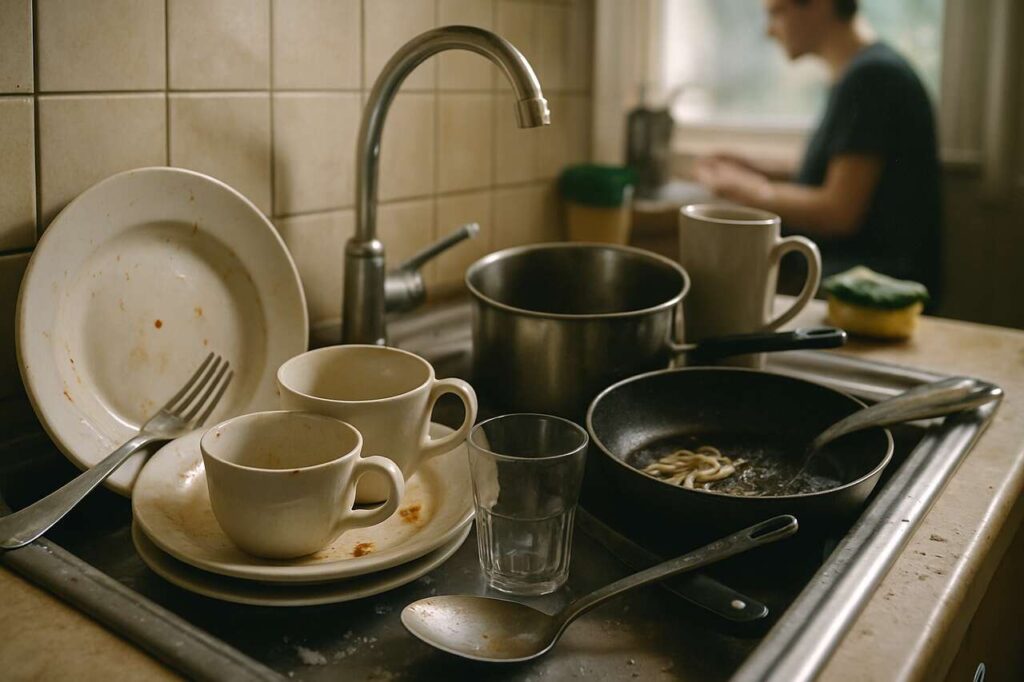
The state of one’s kitchen sink can reveal far more about a person than simply their approach to household maintenance. Behavioural patterns surrounding dirty dishes often reflect deeper psychological traits, time management preferences, and emotional states. Whilst some individuals tackle washing-up immediately after meals, others allow crockery and cutlery to accumulate, creating towers of unwashed items that linger for days. This seemingly mundane domestic habit offers fascinating insights into personality, mental wellbeing, and daily functioning. Understanding the behaviours associated with dish accumulation can help us recognise patterns in ourselves and others, potentially illuminating areas where small changes might yield significant improvements in overall quality of life.
Procrastination habits
The tendency to delay immediate tasks
Individuals who allow dirty dishes to pile up frequently exhibit chronic procrastination tendencies that extend beyond kitchen maintenance. This behaviour reflects a broader pattern of postponing tasks that require immediate attention, often rationalising that they will address the accumulation “later” or “when there’s more time”. The psychological mechanism behind this involves temporal discounting, where the immediate discomfort of washing dishes feels more burdensome than the future consequence of facing a mountain of dirty crockery.
Emotional avoidance mechanisms
Procrastination around household chores often serves as an emotional avoidance strategy. When experiencing stress, anxiety, or depressive symptoms, the simple act of washing dishes can feel overwhelming. Key characteristics include:
- Difficulty initiating tasks even when aware of their simplicity
- Preference for mentally stimulating activities over mundane chores
- Feelings of guilt or shame about the accumulation, which paradoxically reinforces avoidance
- Cyclical patterns where procrastination creates more work, leading to further delay
This behaviour pattern doesn’t necessarily indicate laziness but rather reveals how individuals manage cognitive and emotional resources during challenging periods. The dishes become symbolic of larger feelings of being overwhelmed by life’s demands.
Beyond the immediate kitchen environment, these procrastination habits often signal broader challenges with establishing and maintaining daily routines.
Lack of daily organisation
Absence of structured routines
People who let dishes accumulate typically struggle with establishing consistent daily routines. Their approach to household management lacks the systematic structure that prevents tasks from snowballing. Without designated times for specific chores, everything becomes optional, leading to selective completion based on mood or immediate necessity rather than planned maintenance.
Environmental management challenges
The inability to maintain an organised kitchen space often reflects wider difficulties with environmental control. These individuals may experience:
| Organisational challenge | Manifestation in behaviour |
|---|---|
| Time blindness | Underestimating how long tasks take or losing track of time entirely |
| Decision fatigue | Feeling exhausted by small choices like when to wash up |
| Prioritisation difficulties | Struggling to determine which tasks deserve immediate attention |
| Follow-through issues | Starting cleaning efforts but abandoning them mid-task |
The ripple effect on other life areas
This organisational deficit rarely remains confined to the kitchen. It typically extends to other domains such as workspace management, financial administration, and personal scheduling. The dishes serve as a visible indicator of invisible struggles with executive function and self-regulation that affect multiple aspects of daily life.
The physical presence of accumulated dishes doesn’t merely reflect organisational challenges; it actively contributes to psychological burden.
The psychological impact of clutter
Cognitive load and mental clarity
Research consistently demonstrates that visual clutter significantly increases cognitive load. Dirty dishes piling up in the sink create a constant background stressor that depletes mental resources. Each time someone enters the kitchen, their brain must process this disorder, triggering mild stress responses that accumulate throughout the day. This environmental chaos makes it harder to focus, make decisions, and maintain emotional equilibrium.
The stress-clutter cycle
A particularly insidious pattern emerges where clutter and emotional distress feed into each other:
- Initial stress or overwhelm leads to neglecting dishes
- Accumulating dishes create visual reminder of tasks undone
- This visual chaos generates additional anxiety and feelings of inadequacy
- Increased emotional distress makes initiating cleaning feel even more difficult
- The cycle intensifies as the problem grows larger
Breaking this cycle requires addressing both the physical clutter and the emotional state simultaneously, as tackling only one aspect often proves insufficient for lasting change.
Sleep quality and domestic environment
Studies reveal a compelling connection between household disorder and sleep disturbances. Individuals living in cluttered environments, including those with persistent dirty dish accumulation, report higher rates of insomnia and poor sleep quality. The psychological weight of knowing tasks remain incomplete creates a subtle but persistent activation of the stress response system, interfering with the relaxation necessary for restorative sleep.
Understanding how clutter affects mental wellbeing naturally leads to examining how different individuals approach the temporal aspects of household maintenance.
Preferences in time management
Immediate versus delayed gratification
The dish-washing divide often reflects fundamental differences in temporal orientation and gratification preferences. Those who clean immediately after meals demonstrate a preference for short-term effort to achieve long-term benefit, whilst dish accumulators often prioritise immediate leisure or rest over preventative maintenance. This isn’t simply about discipline but reveals deeper patterns in how individuals weigh present comfort against future consequences.
The “clean as you go” philosophy
People who maintain clear sinks typically embrace a preventative approach to household management. Their time management philosophy includes:
- Viewing small, regular efforts as less burdensome than large, infrequent tasks
- Recognising that immediate action prevents task accumulation
- Experiencing satisfaction from completing small tasks promptly
- Understanding that clean environments facilitate other activities
This approach reflects proactive stress management, where potential problems are addressed before they develop rather than dealt with reactively once they’ve become overwhelming.
Task batching versus continuous maintenance
Interestingly, some dish accumulators aren’t necessarily poor time managers but rather employ a task batching strategy. They prefer to dedicate specific blocks of time to washing everything at once rather than interrupting their day with multiple small cleaning sessions. Whilst this can be efficient in theory, it often fails in practice when the designated cleaning time gets postponed or the accumulated volume becomes genuinely daunting.
These temporal preferences don’t exist in isolation but connect intimately with broader psychological attitudes towards domestic responsibilities.
Mindset influence on household chores
Attitudes towards domestic responsibility
The way individuals conceptualise household chores profoundly affects their execution of these tasks. Those who view washing dishes as a necessary act of self-care and environmental stewardship approach it differently than those who see it as an unwelcome obligation. This mindset difference encompasses:
- Perception of chores as either nurturing or burdensome activities
- Sense of personal responsibility versus resentment towards domestic demands
- Connection between clean spaces and self-respect
- Understanding of how shared environments affect others
Mindfulness and present-moment awareness
Individuals who maintain clean kitchens often practice greater mindfulness in daily activities. They remain present during meals and their aftermath, naturally transitioning from eating to cleaning without mental resistance. This mindful approach transforms washing dishes from a chore into a meditative practice, finding satisfaction in the sensory experience of warm water, the progression from dirty to clean, and the restoration of order.
Self-discipline and personal standards
The discipline to wash dishes immediately reflects broader patterns of self-regulation. These individuals typically maintain higher personal standards for their living environment, not from perfectionism but from recognising how their surroundings influence wellbeing. They demonstrate:
| Disciplined trait | Expression in behaviour |
|---|---|
| Consistency | Maintaining standards regardless of mood or energy levels |
| Humility | Accepting that basic maintenance is everyone’s responsibility |
| Foresight | Anticipating how current actions affect future comfort |
| Respect | Honouring shared spaces and considering others’ experiences |
The habits surrounding something as mundane as dirty dishes reveal intricate connections between psychological traits, emotional wellbeing, and daily functioning. Whether dishes pile up or get washed immediately reflects patterns of procrastination, organisational capacity, stress management, time preferences, and fundamental mindsets towards domestic life. Recognising these behaviours in ourselves offers opportunities for growth, not through self-criticism but through understanding the underlying factors that shape our choices. Small shifts in approach—establishing simple routines, addressing emotional barriers, or reframing how we view household tasks—can create meaningful improvements in both our living environments and overall quality of life. The state of the kitchen sink may seem trivial, but it serves as a revealing window into how we navigate the daily demands of modern existence.