



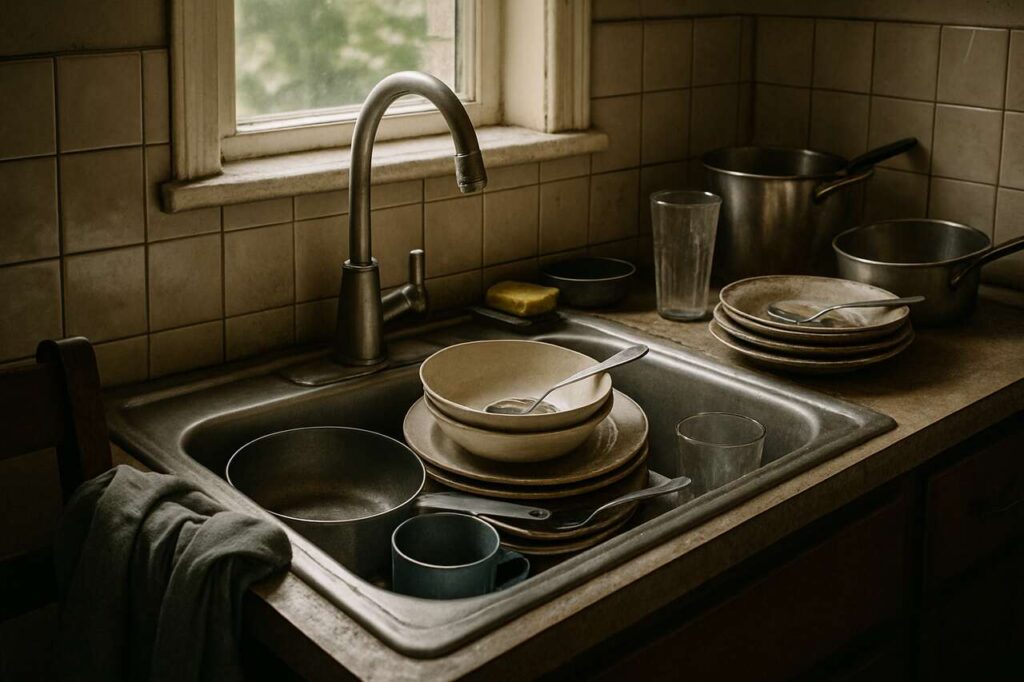
The seemingly mundane act of leaving dirty dishes in the sink or unwashed clothes piled in a corner can reveal far more about an individual’s psychological state than one might initially assume. These everyday habits, often dismissed as mere laziness or poor time management, actually serve as windows into deeper patterns of behaviour, emotional regulation and personality traits. Understanding the psychology behind these domestic choices offers valuable insights into how people manage stress, process responsibility and navigate their daily lives.
Household procrastination and its psychological implications
The cognitive burden of delayed tasks
Household procrastination represents more than simple avoidance of unpleasant tasks. When individuals consistently postpone washing dishes or laundering clothes, they engage in a pattern of temporal discounting, where immediate comfort takes precedence over future consequences. This behaviour creates what psychologists term a cognitive load, as the undone tasks occupy mental space even when not actively being addressed.
Research into procrastination behaviours reveals several underlying psychological mechanisms:
- emotional regulation difficulties that make confronting mundane tasks feel overwhelming
- perfectionist tendencies that prevent starting tasks unless conditions feel ideal
- executive function challenges affecting task initiation and completion
- avoidance coping strategies used to manage underlying anxiety or depression
The accumulation effect on mental wellbeing
As dirty dishes and unwashed clothes accumulate, they create a visual reminder of incomplete responsibilities that can significantly impact psychological comfort. This physical clutter often mirrors internal states of disorganisation or emotional overwhelm. The constant presence of these undone tasks generates a low-level stress response that individuals may not consciously recognise but nonetheless affects their overall mood and functioning.
Beyond the immediate psychological implications, understanding these patterns helps explain why some individuals struggle more than others with maintaining domestic order, setting the stage for recognising the visible signs of deeper organisational challenges.
Revealing signs of disorganisation
Environmental indicators of internal states
The state of one’s living space frequently serves as an external manifestation of internal psychological organisation. Leaving dirty dishes or unwashed clothes consistently indicates potential struggles with:
| Behavioural indicator | Possible psychological meaning |
|---|---|
| Dishes left for multiple days | Difficulty with task prioritisation or executive dysfunction |
| Clothes scattered randomly | Challenges with spatial organisation or decision fatigue |
| Inconsistent cleaning patterns | Fluctuating energy levels or mood instability |
| Cleaned only when expecting visitors | External motivation dependency or social anxiety |
The distinction between temporary lapses and chronic patterns
It remains crucial to distinguish between occasional procrastination during particularly stressful periods and chronic disorganisation that persists regardless of circumstances. Temporary lapses in household maintenance often correlate with specific life stressors such as work deadlines, relationship difficulties or health challenges. These situational responses differ fundamentally from persistent patterns that may indicate attention deficit disorders, depression or other psychological conditions requiring professional attention.
These organisational challenges do not exist in isolation but rather interact with various stress factors that further complicate household management.
Stress factors related to household chores
The paradox of domestic tasks and anxiety
Household chores create a peculiar psychological paradox where the tasks meant to create order and comfort instead become sources of significant stress. For many individuals, dirty dishes and unwashed clothes represent more than simple cleaning tasks; they symbolise personal failure, inadequacy or loss of control. This symbolic weight transforms routine maintenance into emotionally charged activities that trigger avoidance behaviours.
Several stress factors specifically contribute to household procrastination:
- decision fatigue from numerous daily choices reducing capacity for additional task management
- time scarcity creating genuine conflicts between competing priorities
- lack of immediate consequences allowing postponement without apparent penalty
- absence of external accountability in private living spaces
- sensory sensitivities making certain cleaning tasks physically uncomfortable
The cycle of stress and avoidance
A self-perpetuating cycle often develops where stress leads to procrastination, which creates more clutter, generating additional stress. This pattern proves particularly challenging because the relief gained from avoiding the task provides short-term emotional benefit whilst simultaneously worsening the long-term situation. Breaking this cycle requires understanding that the temporary comfort of avoidance comes at the cost of sustained psychological burden.
These individual struggles with household tasks inevitably extend beyond personal wellbeing to affect interpersonal dynamics and relationship quality.
The impact of cleaning habits on relationships
Domestic habits as relationship indicators
Differences in cleaning habits frequently emerge as significant sources of relationship conflict and tension. When partners or housemates maintain divergent standards regarding dirty dishes or unwashed clothes, these differences often represent deeper incompatibilities in values, priorities and communication styles. The individual who leaves dishes unwashed may genuinely not perceive the mess as problematic, whilst their partner experiences genuine distress from the disorder.
Communication breakdowns around household tasks
Conflicts about cleaning habits rarely concern the actual dishes or clothes themselves. Instead, they typically reflect underlying relationship dynamics including:
- perceived inequity in domestic labour distribution
- feelings of disrespect or lack of consideration
- differing definitions of cleanliness and acceptable living standards
- power struggles manifesting through household task completion
- attachment styles affecting comfort with shared spaces
The manner in which couples or housemates navigate these differences provides valuable information about their overall relationship health, conflict resolution skills and capacity for compromise. Successfully managing these domestic disagreements requires moving beyond surface-level complaints to address the psychological needs and communication patterns underlying the behaviours.
Understanding these relational dynamics naturally leads to examining how to accurately interpret what procrastination behaviours truly signify about an individual’s psychological state.
How to interpret procrastination behaviours
Context-dependent interpretation
Accurately interpreting why someone leaves dirty dishes or unwashed clothes requires careful consideration of context rather than rushing to judgement. The same behaviour may indicate entirely different psychological states depending on surrounding circumstances. A normally organised person experiencing a temporary lapse likely faces situational stressors, whilst someone with chronic disorganisation may be managing undiagnosed psychological or neurological conditions.
Distinguishing between various psychological causes
Several distinct psychological profiles commonly associate with household procrastination:
| Profile type | Characteristics | Underlying psychology |
|---|---|---|
| The overwhelmed individual | Generally organised but currently struggling | Temporary stress response or burnout |
| The executive function challenged | Consistent difficulty with task initiation | ADHD or similar neurological differences |
| The depressed procrastinator | Lack of motivation across life domains | Clinical depression or other mood disorders |
| The learned behaviour practitioner | Never developed cleaning habits | Environmental and cultural conditioning |
The importance of self-awareness
Individuals who recognise their own patterns of household procrastination demonstrate valuable self-awareness that represents the first step towards meaningful change. This recognition allows for honest assessment of whether the behaviour stems from temporary circumstances, requires practical solutions or indicates need for professional psychological support. Self-compassion proves essential during this process, as harsh self-judgement typically exacerbates rather than resolves procrastination patterns.
With this understanding of interpretation frameworks established, attention can turn to practical approaches for addressing and overcoming these challenging patterns.
Solutions to overcome household procrastination
Practical strategies for immediate implementation
Addressing household procrastination requires targeted strategies that acknowledge the psychological complexity underlying these behaviours whilst providing actionable steps for improvement:
- implementing the “two-minute rule” where tasks taking less than two minutes receive immediate completion
- establishing specific routines that reduce decision-making burden
- using visual cues and reminders to prompt task completion
- breaking larger tasks into smaller, manageable components
- creating accountability through shared household schedules or apps
- addressing underlying psychological conditions through professional support
Addressing root causes rather than symptoms
Sustainable improvement requires moving beyond surface-level behavioural changes to address underlying psychological factors. This might involve therapy for depression or anxiety, medication for attention deficit disorders, or skill-building for individuals who never learned effective household management. The most successful approaches combine practical strategies with psychological insight, recognising that dirty dishes and unwashed clothes represent symptoms rather than the core problem.
Building sustainable habits through self-compassion
Perhaps most importantly, overcoming household procrastination benefits enormously from self-compassionate approaches that acknowledge difficulty without harsh judgement. Recognising that these struggles often reflect genuine psychological challenges rather than character flaws allows individuals to seek appropriate support and implement realistic solutions tailored to their specific circumstances and needs.
The psychology behind leaving dirty dishes and unwashed clothes reveals complex interactions between personality traits, mental health, life circumstances and learned behaviours. Rather than simple laziness, these patterns often indicate deeper struggles with stress management, executive function, emotional regulation or relationship dynamics. Recognising the psychological significance of household habits allows for more compassionate understanding of both oneself and others, whilst providing pathways towards meaningful improvement. Whether through practical strategies, professional support or enhanced self-awareness, addressing these behaviours offers opportunities for growth that extend far beyond achieving a cleaner living space.